
Buying your first home in British Columbia? You could be eligible for thousands of dollars in savings.
Purchasing your first home is an exciting milestone, but with property prices across Richmond and Metro Vancouver, saving enough for a down payment and covering closing costs can feel overwhelming.
The good news? There are several government programs, tax incentives, and mortgage options designed to make homeownership more accessible.
Whether you're just starting to save or already browsing properties, understanding these benefits could make a significant difference in your homebuying journey.
Here are seven programs every first-time homebuyer in BC should know about.
1. Save Up to $50,000 in GST on a Newly Built Home
If you're considering purchasing a brand-new home, this could be one of the biggest financial incentives available to you.
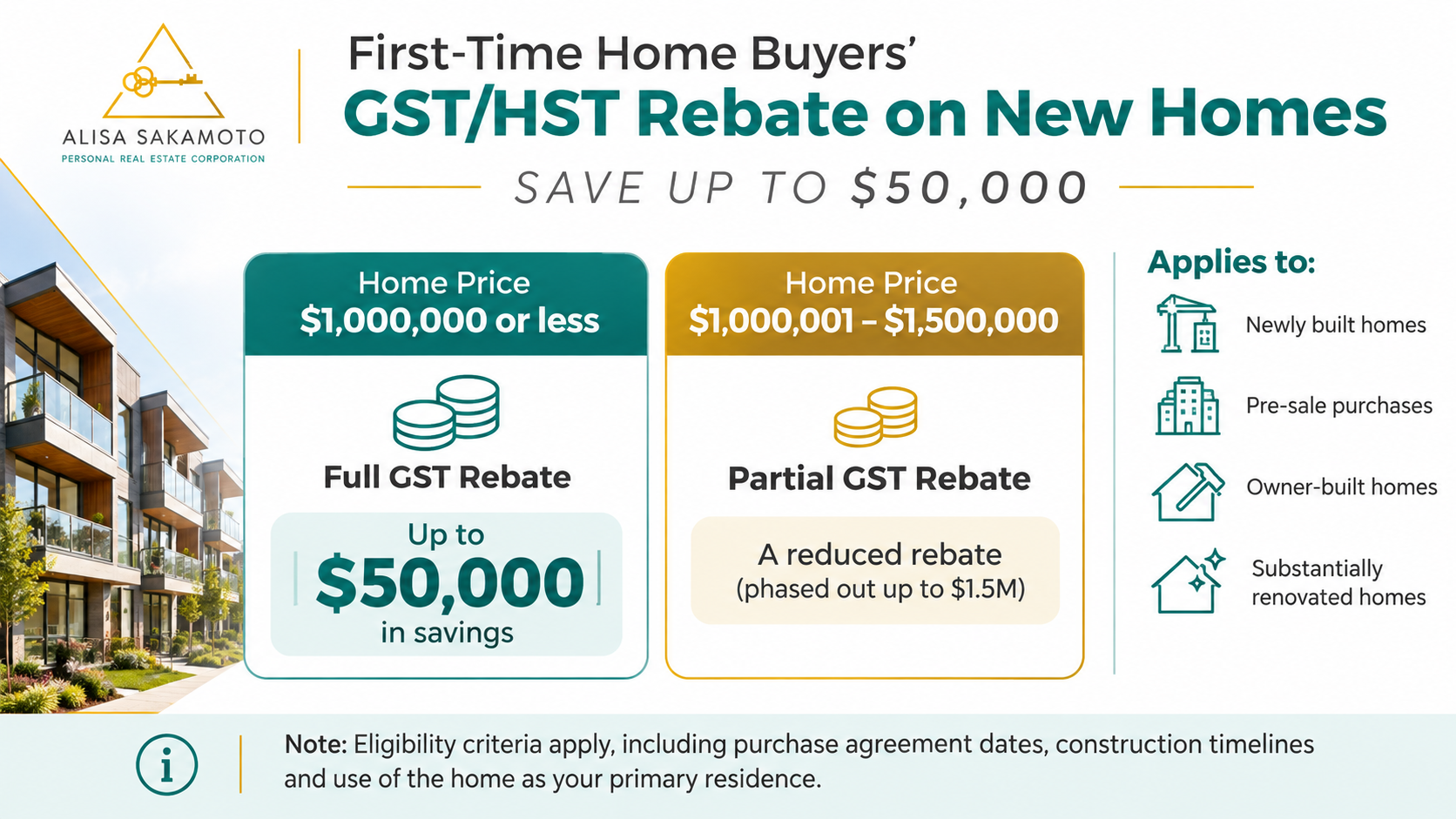
The federal First-Time Home Buyers' GST/HST Rebate is designed to reduce the cost of purchasing a qualifying new or substantially renovated home.
Eligible buyers may receive:
A full GST rebate on qualifying homes priced at $1 million or less, with potential savings of up to $50,000.
A partial GST rebate on qualifying homes priced between $1 million and $1.5 million.
This benefit can apply to certain new construction purchases, pre-sale properties, and owner-built homes, provided the eligibility requirements are met.
For buyers considering a new condo or townhome in Richmond, this incentive could substantially reduce the overall purchase cost.
Keep in mind that purchase agreement dates, construction timelines, and occupancy requirements can affect eligibility.
2. Reduce Your Property Transfer Tax When Buying Your First Home
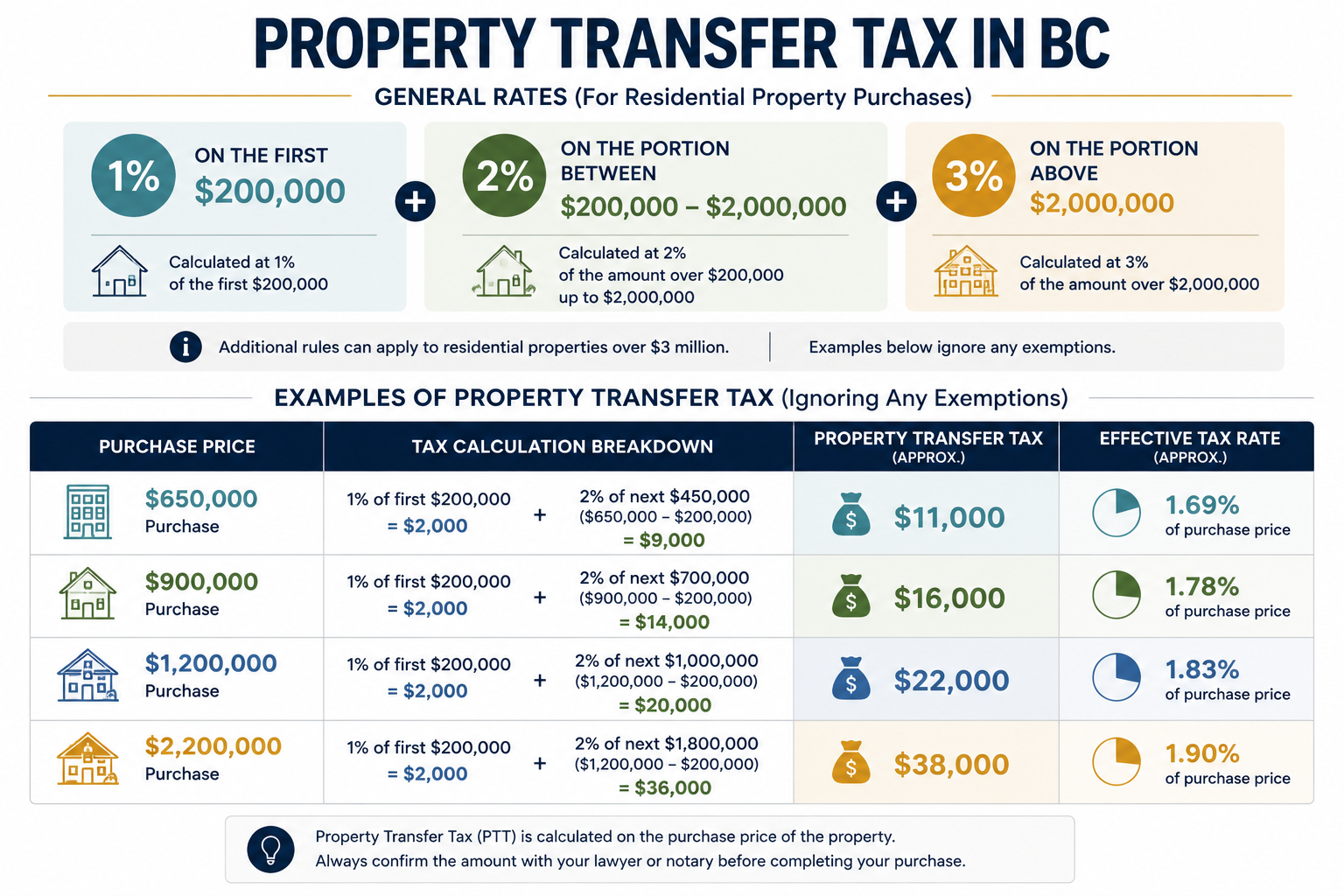
One expense that sometimes surprises first-time buyers is BC's Property Transfer Tax (PTT).
This tax is generally paid when ownership of a property is transferred, and depending on the purchase price, it can add thousands of dollars to your closing costs.
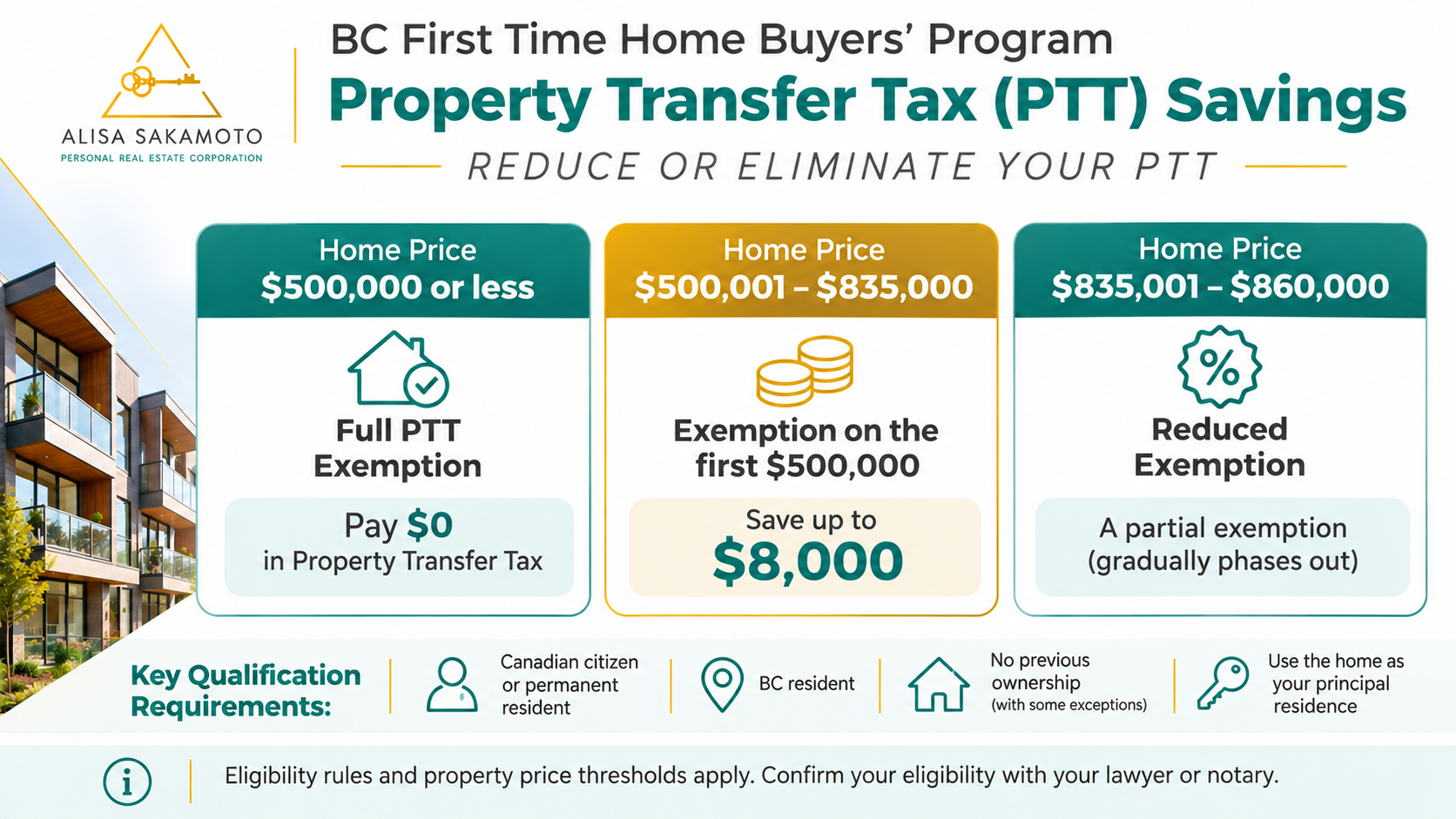
Fortunately, BC offers a First Time Home Buyers' Program that may reduce or eliminate this expense.
Qualifying buyers may receive:
Homes priced at $500,000 or less: A full Property Transfer Tax exemption.
Homes priced between $500,000 and $835,000: An exemption on the first $500,000 of the property's value, potentially saving up to $8,000.
Homes priced between $835,000 and $860,000: A reduced exemption that gradually phases out.
To qualify, buyers must meet specific requirements regarding residency, previous homeownership, and their intention to use the property as their principal residence.
With many first-time buyers looking at condos and townhomes throughout Richmond and the Lower Mainland, understanding this exemption before making an offer can help you budget more accurately.
3. Buying a Brand-New Home? There's Another Tax Exemption Worth Knowing About
Even if you don't qualify for the regular First Time Home Buyers' Property Transfer Tax exemption, you may still be eligible for savings when purchasing a newly built property.
BC's Newly Built Home Exemption provides qualifying purchasers with:
A full Property Transfer Tax exemption on eligible new homes valued at $1.1 million or less.
A partial exemption on eligible properties valued between $1.1 million and $1.15 million.
Unlike the First Time Home Buyers' Program, this exemption isn't limited to people purchasing their first home.
This makes it particularly appealing to buyers considering newly constructed condos, townhomes, or other qualifying properties.
One important distinction: you cannot combine both BC Property Transfer Tax exemptions on the same purchase. Your lawyer or notary can help determine which exemption is most beneficial.
4. Grow Your Down Payment Faster With a First Home Savings Account (FHSA)
Saving for a down payment is often one of the biggest challenges for first-time buyers.
The First Home Savings Account, or FHSA, is designed to help eligible Canadians save for their first home while receiving valuable tax advantages.
Here's how it works:
Contribute up to $8,000 annually, subject to your available contribution room.
Save up to $40,000 in lifetime contributions.
Claim eligible contributions as deductions against taxable income.
Allow investments within the account to grow tax-free.
Withdraw funds tax-free when purchasing a qualifying first home.
For couples who both qualify, that could mean contributing a combined $80,000 toward their first property, plus any investment growth.
A helpful tip: FHSA contribution room begins accumulating once you open your first account. Even if purchasing a home is still a few years away, opening an FHSA early may be worth considering.
5. Use Your RRSP Savings Toward Your First Home
Did you know that you may be able to use money from your Registered Retirement Savings Plan (RRSP) to help purchase your first home?
Through the federal Home Buyers' Plan (HBP), eligible buyers can withdraw up to $60,000 from their RRSP to purchase or build a qualifying home.
For a couple where both individuals qualify, that's potentially $120,000 available toward a home purchase.
You may also be able to use the Home Buyers' Plan alongside your FHSA, giving you additional flexibility when assembling your down payment.
However, there is an important difference between these programs.
While qualifying FHSA withdrawals generally don't need to be repaid, RRSP withdrawals through the Home Buyers' Plan must generally be repaid over a specified period.
Before using retirement savings, it's worth speaking with a financial advisor to understand how the withdrawal and repayment requirements may affect your long-term financial goals.
6. Claim a Federal Tax Credit After Purchasing Your First Home
The costs of buying a home don't end with the down payment.
Legal fees, inspections, moving expenses, and other closing costs can add up quickly.
The federal Home Buyers' Amount is another incentive that can help eligible first-time purchasers offset some of these expenses.
Qualifying buyers can claim up to $10,000 on their federal income tax return.
For the 2026 tax year, this may translate into a non-refundable federal tax credit worth approximately $1,400, depending on your tax situation.
Although this isn't a direct payment of $10,000, it can provide welcome tax savings after your purchase.
7. Lower Your Monthly Payments With More Flexible Mortgage Options
Affordability isn't just about saving for a down payment. It's also about making sure your monthly mortgage payments fit comfortably within your budget.
Recent changes to Canada's insured mortgage rules have introduced additional flexibility for qualifying homebuyers.
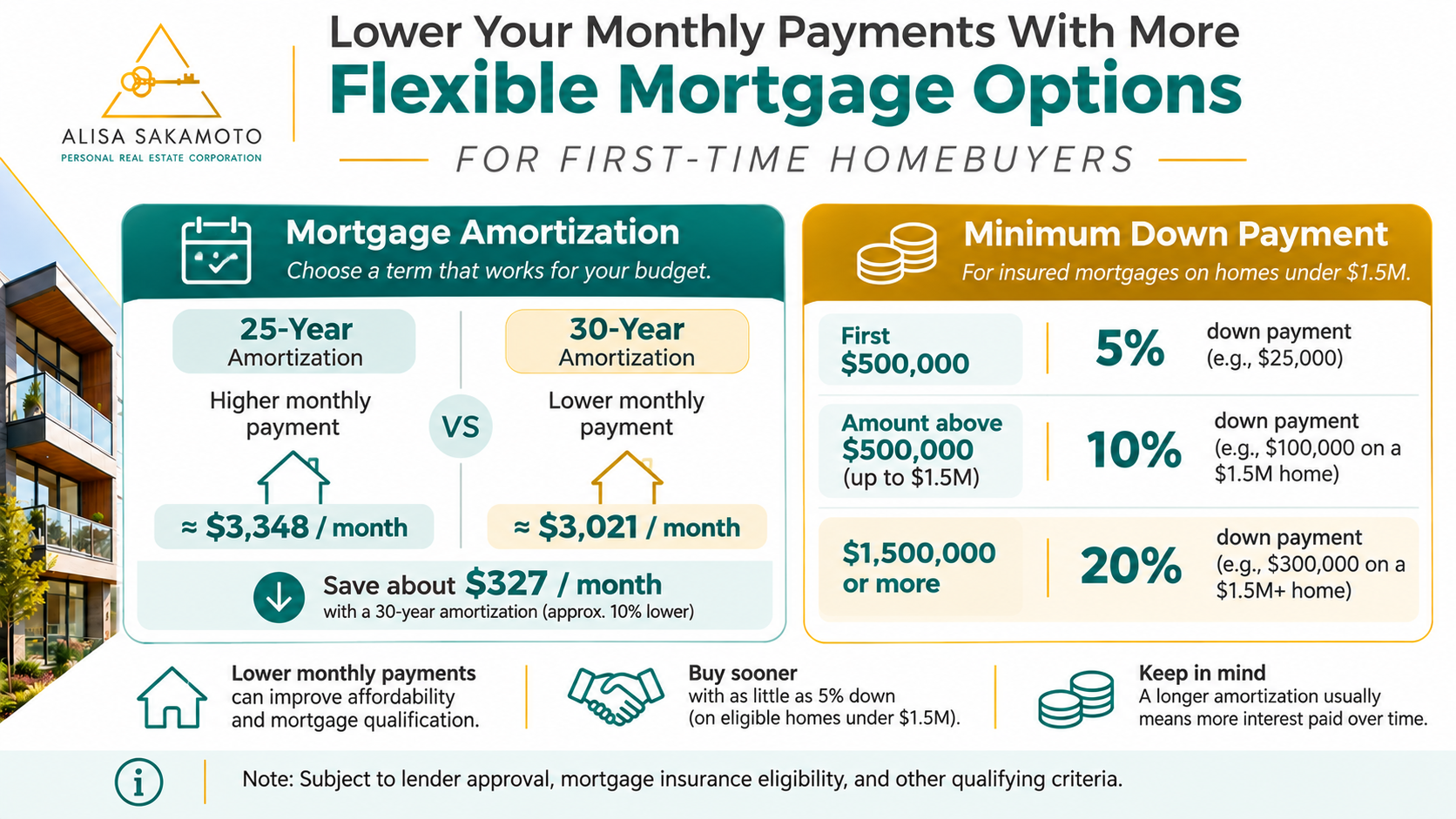
Eligible first-time buyers may be able to choose a 30-year mortgage amortization instead of the traditional 25-year option.
Spreading your mortgage over a longer period generally means lower monthly payments, which may help with affordability and mortgage qualification.
However, it's important to understand that a longer amortization typically results in paying more interest over the life of the mortgage.
Additionally, eligible buyers purchasing a home for less than $1.5 million may qualify for an insured mortgage with less than 20% down.
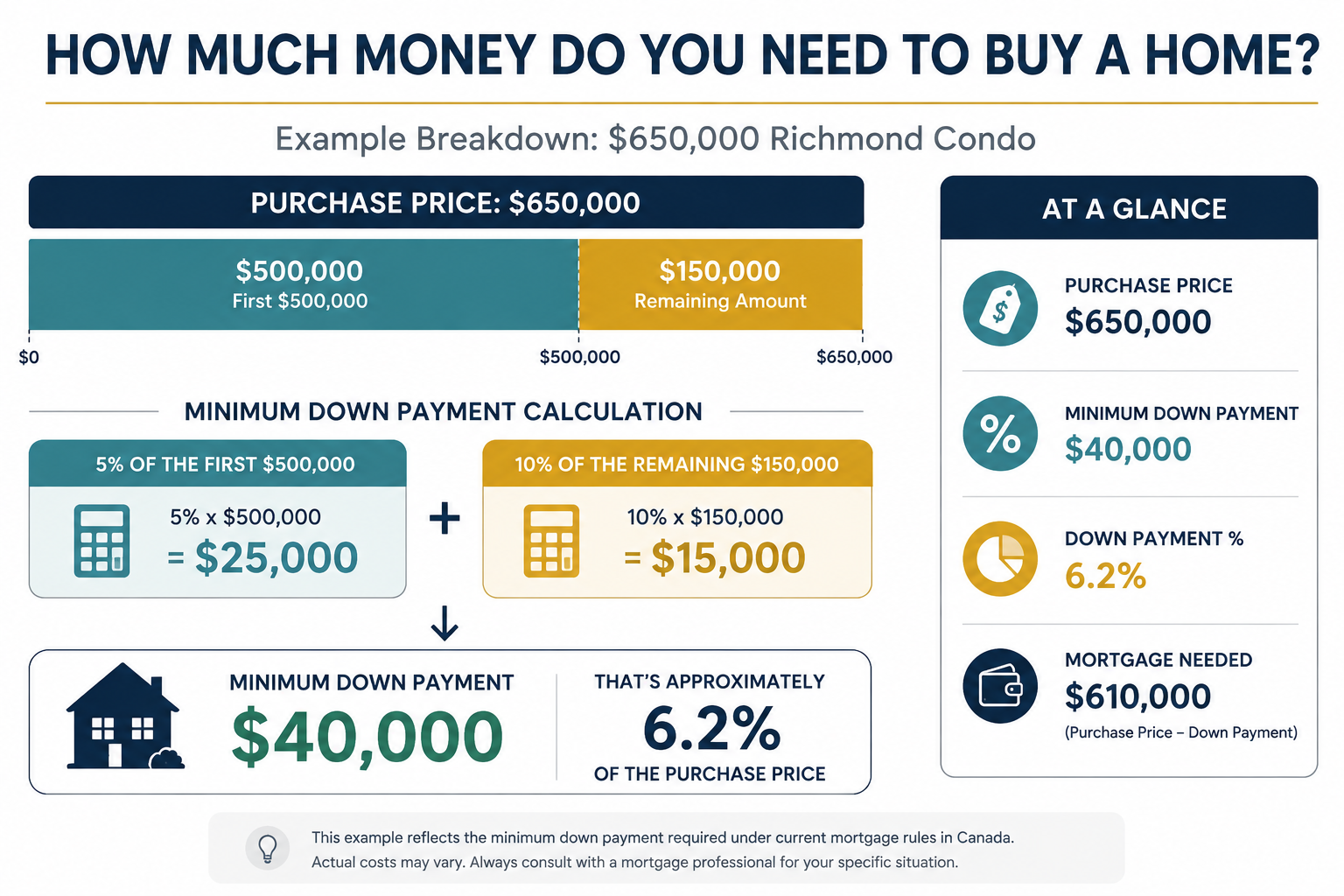
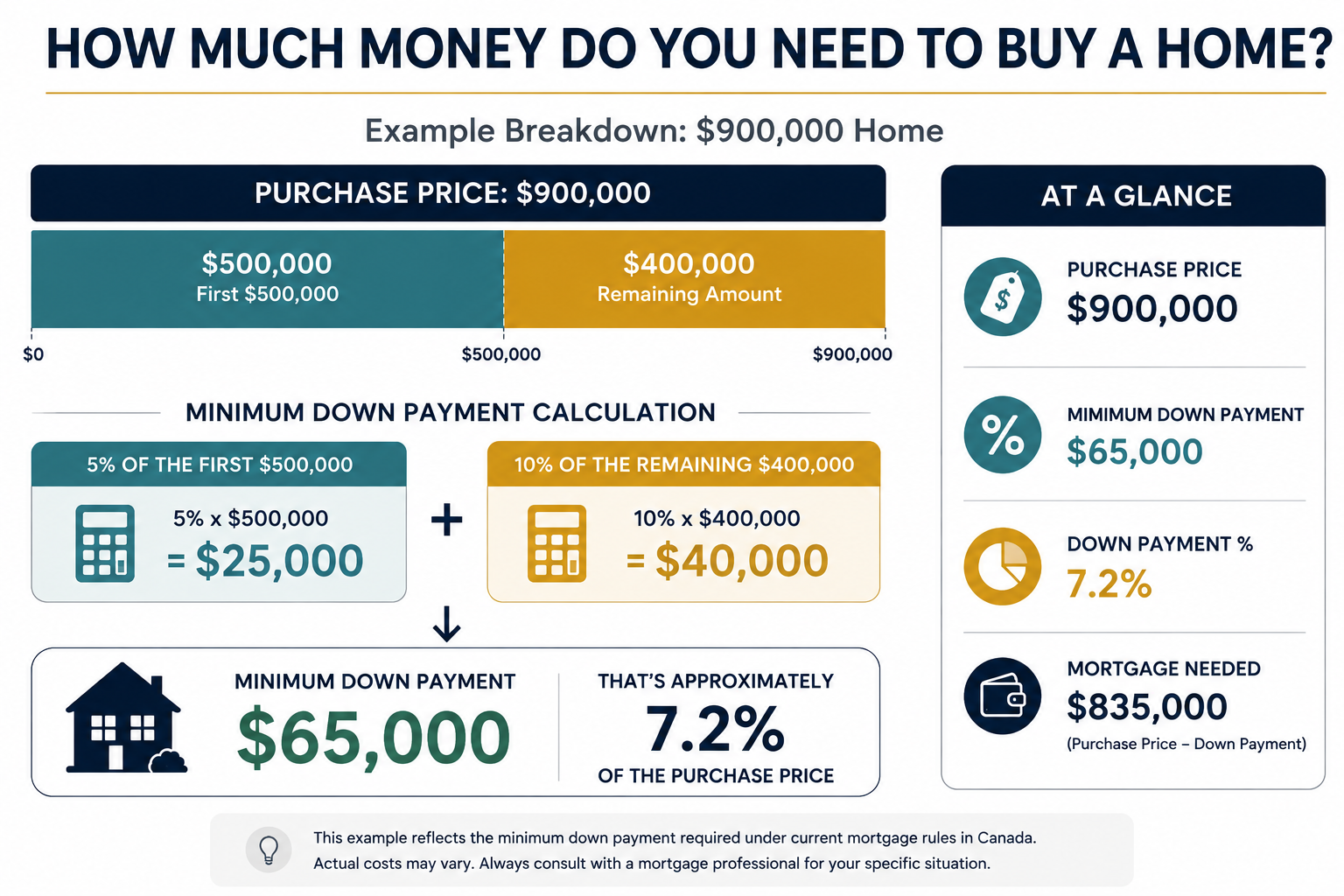
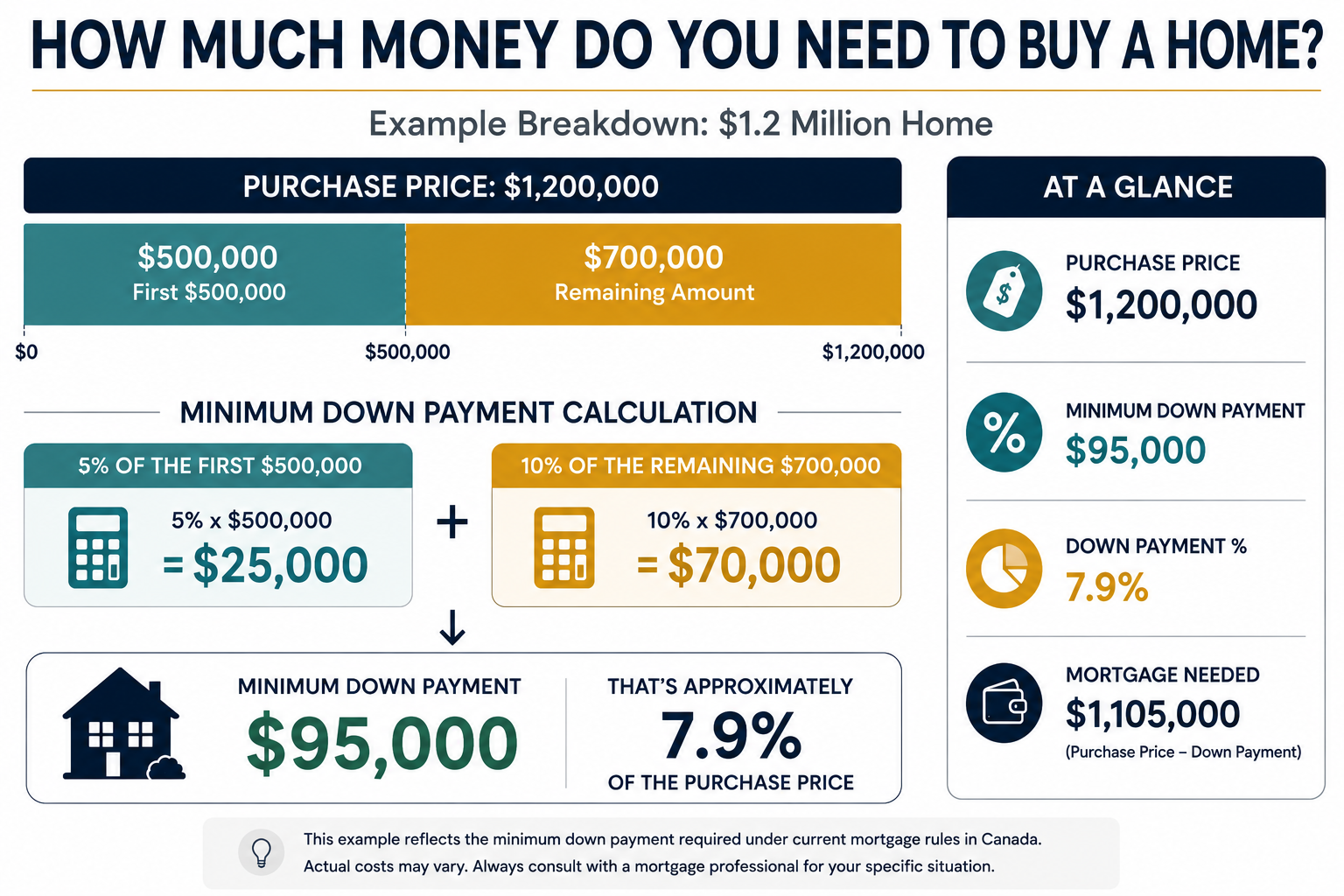
The minimum down payment is generally calculated as follows:
5% on the first $500,000 of the purchase price.
10% on the portion above $500,000 for eligible homes priced below $1.5 million.
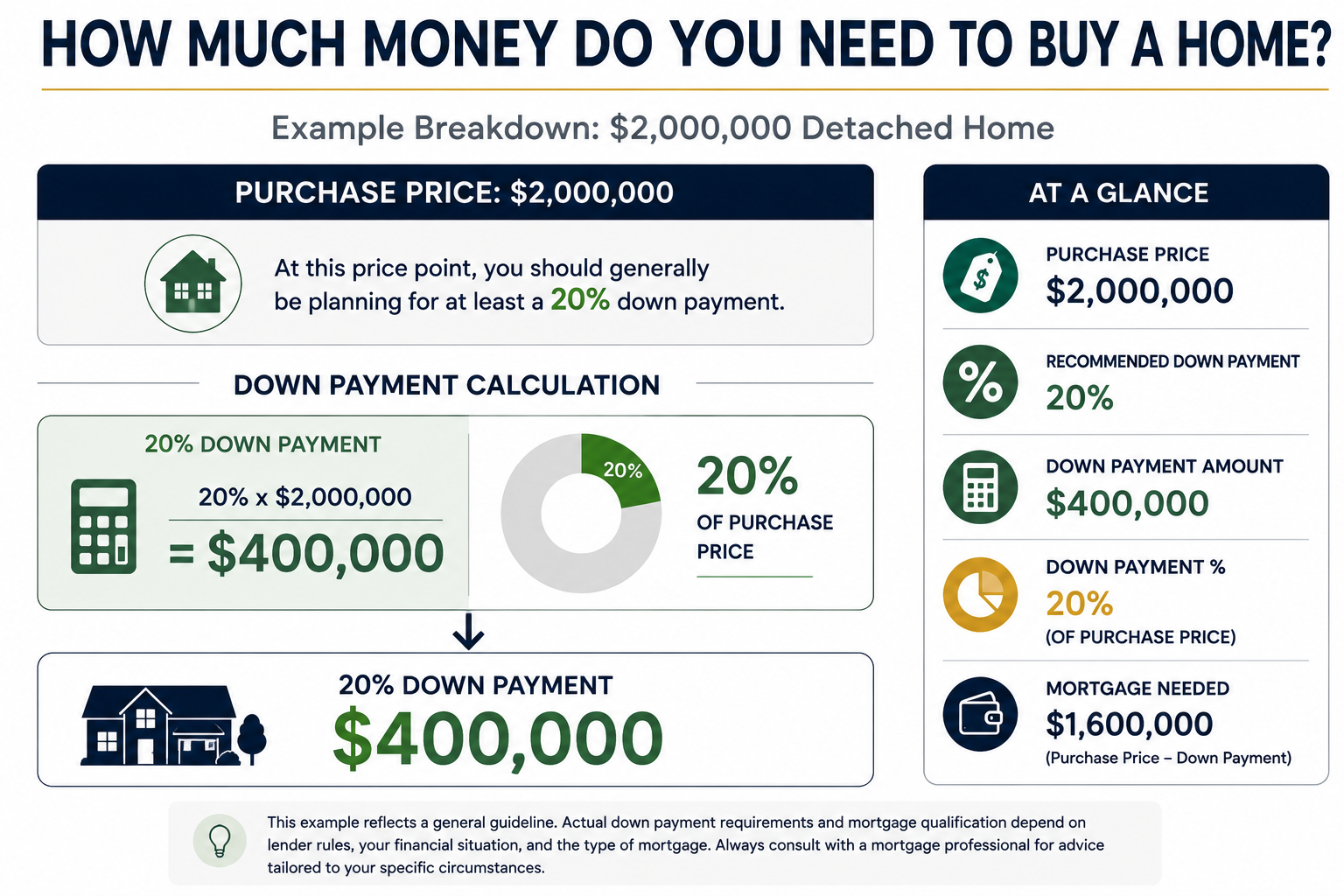
20% down for homes priced at $1.5 million or more.
These options can help buyers enter the market sooner without necessarily having to save a full 20% down payment.
Can You Combine These First-Time Homebuyer Benefits?
In many cases, yes!
One of the biggest advantages of understanding these programs is that several may be used together.
For example, an eligible first-time buyer purchasing a newly built home may be able to take advantage of a federal GST rebate, a BC Property Transfer Tax exemption, savings from an FHSA, and an RRSP Home Buyers' Plan withdrawal.
They may also qualify for the federal Home Buyers' Amount and a 30-year insured mortgage amortization.
When used strategically, these programs could make a meaningful difference in both your upfront purchasing costs and your ongoing monthly expenses.
Of course, every buyer's situation is different. Eligibility requirements vary between programs, and not all incentives apply to every property or purchaser.
Your First Home Might Be More Attainable Than You Think
Buying your first home is a major financial decision, especially in a competitive real estate market like Richmond and Metro Vancouver.
But you don't have to figure everything out on your own.
Understanding the financial incentives available to you, knowing what you can comfortably afford, and having the right professionals guiding you can make the entire process much easier.
Whether you're considering a condo in Richmond, a townhome in South Surrey, or your first property elsewhere in the Lower Mainland, having a clear plan is the best place to start.
Ready to Take the First Step Toward Homeownership?
From exploring neighbourhoods and finding the right property to connecting you with trusted mortgage, legal, and financial professionals, my goal is to make your first home purchase as smooth and informed as possible.
Thinking about buying your first home in Richmond or Greater Vancouver? Contact me today. Let's explore your options and help you take the next step toward homeownership.

Disclaimer: Government programs, tax credits, mortgage rules, and eligibility requirements are subject to change. Each incentive has its own qualification criteria, including requirements relating to residency, previous property ownership, purchase price, occupancy, and applicable dates. Buyers should confirm current program details with the relevant government agencies and consult qualified mortgage, legal, and tax professionals before making financial decisions.







 The data relating to real estate on this website comes in part from the MLS® Reciprocity program of either the Greater Vancouver REALTORS® (GVR), the Fraser Valley Real Estate Board (FVREB) or the Chilliwack and District Real Estate Board (CADREB). Real estate listings held by participating real estate firms are marked with the MLS® logo and detailed information about the listing includes the name of the listing agent. This representation is based in whole or part on data generated by either the GVR, the FVREB or the CADREB which assumes no responsibility for its accuracy. The materials contained on this page may not be reproduced without the express written consent of either the GVR, the FVREB or the CADREB.