Congratulations Cheryl!

JUST SOLD November 7th! #39 12351 No 2 Road, Richmond
View this recently sold Townhouse or see all my home sales
I just finished uploading this Condo for sale, 318 6233 LONDON Road, Richmond, British Columbia
London station: reinforced concrete & steel construction. Luxury finishing include 9' ceilings, 2 large balconies, granite countertops throughout, undermount kitchen sinks, glass back splash, quality stainless steel appliances including wine fridge, huge kitchen with overheight cabinets, designer light fixtures, natural bamboo wood flooring, indulgent bathrooms with soaker tub, beautiful west exposure with partial marina views.
 |
||
|
Fall is the perfect time to get your home ready for the coming winter, which can be the most gruelling season for your home. During winter months, it’s important to follow routine maintenance procedures, by checking your home carefully for any problems that may arise and taking corrective action as soon as possible. Fall
Winter
|
Annually
Every Two to Five Years
For other great home maintenance tips, visit:www.cmhc.ca. |
|


Please come with any questions you may have. As always please do not hesitate to give me a call at 604.644.1044 if I can answer any questions before the open house, or if you would like to book a private showing. In the meantime you can take a virtual tour of this gorgeous family home in East Cambie.
Alisa Sakamoto
RE/MAX Westcoast - Steveston Real Estate

Please come with any questions you may have. As always please do not hesitate to give me a call at 604.644.1044 if I can answer any questions before the open house, or if you would like to book a private showing. In the meantime you can take a virtual tour of this Steveston South Townhouse for sale.
Alisa Sakamoto
RE/MAX Westcoast - Steveston Real Estate


Sell First:
There are several benefits to selling your current house before searching for your next home. First of all, once you have sold your house, you will know precisely how much money you have to work with. With a concrete price range, you’ll be able to narrow the pool of houses before you begin looking, and negotiate accordingly. This will allow you to immediately make firm offers on houses that you are serious about purchasing. You can be first in line with an unconditional offer you know you can afford, and this will grant even further negotiating leverage as Sellers tend to take unconditional offers more seriously. When they counter or turn down an offer that’s conditional on the sale of a home, they usually think the Buyer will come back with a better and more firm offer once they have sold their current home. However, if you make an unconditional offer, the Seller will usually give you more consideration, as they realize you’re probably looking at other properties and will move on if your offer is rejected. Likewise, if you have already sold you house, you probably do have a wider opportunity to look around, negotiate, and find the best deal and fit for you and your family.
The flip side of this scenario, however, is that if you don’t find the right property before the closing date of the house you’ve already sold, you may have to look for temporary housing until you do find what you’re looking for.
So, before you opt to sell first, you should determine whether you have alternate, temporary options, in case you have to move from your house before you’ve found a new one. How would you and your family deal with living in a transition home for an undetermined period of time?
Buy First:
Buying a new house without having sold your current home may occur if you are interested in a specific property and will only sell your current home if this property comes on the market. It may be a matter of timing—grabbing hold of the home before it’s too late. The same might be said of a property you haven’t had you eye on previously, but that catches your attention due to its uniqueness or unbelievable price. If buying first means you don’t miss out on the real estate opportunity of a lifetime, it may be the best move.
However, be careful. If you buy another property and aren’t able to sell your current home quickly enough, you could end up having to finance both homes and shoulder the extra debt until you sell. You can get a financial appraisal or market evaluation of a home prior to selling, but this doesn’t guarantee the price you’ll ultimately receive for the home after the negotiation process has run its course. Since your selling price will be an unknown, jumping into a purchase could be a gamble, particularly if your budget is tight.
Make sure you’re familiar with all aspects of the financial reality this scenario would create before you purchase another home. You may be faced with owning two homes at once. What type of financial stress would this bring to your life and how would you deal with it? Consider the fact that if your current house doesn’t sell quickly enough, you may be forced to sell it off at a reduced price in order align the closing dates of your two properties. What effect would this have on your financial situation?
Conditional Offer:
An additional option involves making your offer to purchase conditional upon the sale of your current property within a specified period. Conditional offers usually include a clause that allows for the Sellers to keep their property on the market and remain open to other offers while you try to sell your home. If the Sellers receive another attractive offer before you’ve sold your home, they may accept and ask you to either remove your condition and firm up your offer, or to back down from the offer. A conditional offer forms a kind of middle ground, an area of compromise, for those who are afraid to sell or buy first—but doesn’t hold the advantages of the other two options.
One of the drawbacks of the conditional offer is that Sellers tend to take them less seriously. They definitely give stronger consideration to firm offers. This leaves you with less negotiating power. In fact, some Sellers will simply turn down or counter a conditional offer. Other Sellers will believe the Buyer will come back with a more serious offer when their home has sold. So, you may end up having to increase your offer in order to have your conditional offer accepted and keep your foot in the door of your desired house.
Even if your conditional offer is accepted, there is no guarantee another Buyer won’t step in and overthrow your offer before you have sold your current home, which would put you back at the starting line. Also, consider the fact that you cannot withdraw your conditional offer until the end of the period specified in the contract—which means that if a better deal comes along, you will have to wait to jump at it.

But inspecting your roof regularly and making little fixes as needed can prevent some costly repairs down the road -- and keep those raindrops from falling on your head. There's another benefit, too: Keeping your roof in good condition will also be a big plus if you decide to sell your home.
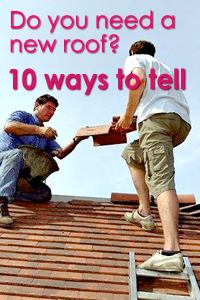 Take it from the top
So, what should you look for when inspecting your roof? The National Roofing Contractors Association (NRCA) recommends you do a roof inspection at least two times a year -- spring and fall. The best place to begin is inside your house -- grab a flashlight and make a trip to the attic.
Here are four things to look for on the inside:
2) Signs of water damage or leaking
3) Dark spots and trails
4) Outside light showing through the roof.
Here are four things to look for on the inside:
2) Signs of water damage or leaking
3) Dark spots and trails
4) Outside light showing through the roof.
Exterior check
When you take a look at the exterior of the roof, pay attention to such things as damaged flashing, missing shingles, curling, blistering, buckling, rotting and algae growth (which occurs most often in humid climates and appears as dark or greenish stains).
Check out these tips on what to check on the outside:
6) Scan the roof for loose material or wear around chimneys, vents, pipes or other penetrations.
7) Watch out for an excessive amount of shingle granules (they look like large grains of sand) in the gutters -- this is a sign of advanced wear.
8) Check for signs of moisture, rot or mold. Note that wet spots may not be directly under your faulty shingle; water can travel down to its lowest spot before it drips. Mold, fungi and bacteria can grow quickly -- within 24 to 48 hours of a water-related problem.
9) Examine the drainage, and make sure gutters and downspouts are securely attached. Also ensure all drains are open and allow water to exit, and all gutters and downspouts are free of debris.
10) Check that all bath, kitchen and dryer vents go entirely outside of your home, not just into the attic space.
What's the roof made of?
If you have a roof with wooden shakes, you should also watch out for damage from termites, carpenter ants and/or other wood-boring pests.
Check the simplest solutions first
If your roof has water damage, don't jump the gun and assume you need to start all over with a brand new roof. If your roof was properly installed and is less than than 15 to 20 years old, it can often be repaired rather than replaced.
Contact a licensed roofing contractor -- or three -- to find out what they think needs to be done and to get an estimate.
Starting over
If you do decide to go ahead and replace the whole roof, keep weather and other issues specific to your locality in mind when choosing materials.
For example, wood and asphalt shingles aren't especially fire resistant -- and this could be a problem if you live near a lot of dry brush and trees. Slate, tile and metal are more expensive materials, but they are a worthwhile investment because of the extra protection they offer against fire.
If, on the other hand, snow loads are an issue where you live, you might want to consider a durable and lightweight standing-seam metal roof. These can typically cast off the snow before it becomes a problem.
But before setting your heart on slate or tile -- and we know they look really gorgeous -- realize that these are very heavy materials. Some house framing just isn't strong enough to support the extra weight of this sort of roofing.
Start now -- before you have no choice
Don't wait until water is unexpectedly pouring into your home by way of a leaky roof. Start protecting your home by using some simple observation skills. If you find problems, it doesn't necessarily mean you need to replace your roof. Many repairs can be made before a major rebuild is necessary.
If you do need a new roof, be aware that this isn't an average "do it yourself" type of project. It's tough work -- especially if you're taking off the old roof -- and can be dangerous, too. (Roofs slope and are up high... need we say more?)
It's all looking up
Most people list "Having a roof over my head" as one of life's essentials -- and there's a reason for that. It's not just a matter of practicality or aesthetics (though both of those play a part). Your roof is what keeps you and your family safe from the sun and snow, lightning and rain.
So cozy up with the knowledge that once your roof is in tip-top shape, it will stay that way for years to come.
Source: sheknows.com HOME & GARDEN

 The data relating to real estate on this website comes in part from the MLS® Reciprocity program of either the Greater Vancouver REALTORS® (GVR), the Fraser Valley Real Estate Board (FVREB) or the Chilliwack and District Real Estate Board (CADREB). Real estate listings held by participating real estate firms are marked with the MLS® logo and detailed information about the listing includes the name of the listing agent. This representation is based in whole or part on data generated by either the GVR, the FVREB or the CADREB which assumes no responsibility for its accuracy. The materials contained on this page may not be reproduced without the express written consent of either the GVR, the FVREB or the CADREB.